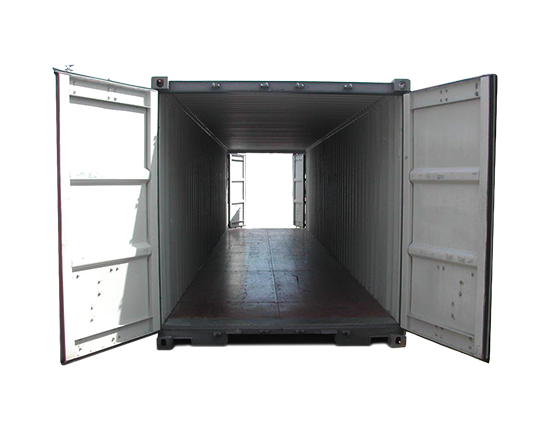
Our shipping container tunnels allow access to stored goods from both ends, so you can get the supplies you need without unloading the entire container. These tunnel containers for rent and sale are not only a storage unit, but also a throughput solution that helps solve access and workflow challenges.
Benefits of Double Door Shipping Containers
The primary benefit of a tunnel container is the ability to move freely through your storage instead of being limited to a single entry point. You can access what you need from either end using the double doors.
Item Security: The steel build and 13-pound Eagle Lock® help secure cargo from weather, damage, and theft. Contents insurance and damage waiver options are available for additional protection.
Easy Access: The double doors allow straightforward access from either side.
Dolly and Forklift Ramp Compatibility: These containers support dolly and forklift ramp entry, making it easier to move heavy and bulky items in and out.
Organized Storage: Pipe racks, shelving, and other optional storage solutions can customize the interior and streamline your storage space.
Double-End Door Container Applications
These drive-through containers have many use cases.
Construction: Logistics and construction teams can move goods through the container and load cargo without unloading other stored items.
Retail: Both-ends-open containers support retail stores and distribution businesses that need organized storage with fast access from either end.
Walkways: A tunnel container can also serve as a covered walkway or temporary passageway between structures. Personnel can walk through the container while staying protected from dust, debris, and adverse weather.
Features of Shipping Container Tunnels
The double door container is more than a standard storage container with doors. It is a flexible workflow tool that offers better access and organization.
Double-Sided Access: These containers have doors on both ends, making it possible to enter from either side or use the container as a temporary covered walkway.
Durable Construction: The all-steel exterior and marine plywood flooring offer strong protection for stored cargo.
Weather-Resistant Design: The double door container is sealed to help protect the interior from snow, rain, dust, and other environmental elements.
Customizable Organization: Tunnel containers can include options such as open sides, roll-up doors, personnel doors, and interior partitions to support your access and storage needs.
20-Foot Double Door Container
The 20-foot container provides convenient storage and access.
External Dimensions: 20′ long, 8′ wide, 8′ 6″ high
Internal Dimensions: 19′ 5 ½” long, 7′ 8″ wide, 7′ 9 7/8″ high
Cubic Capacity: 1,173 cubic feet
Approximate Weight: 5,585 lbs
40-Foot Double Door Container
This 40-foot model has a longer length and larger capacity to increase storage space.
External Dimensions: 40′ long, 8′ wide, 8′ 6″ high
Internal Dimensions: 39′ 5 ½” long, 7′ 8″ wide, 7′ 9 7/8″ high
Cubic Capacity: 2,389 cubic feet
Approximate Weight: 8,950 lbs
40-Foot Double Door High Cube Container
This container has additional height to fit oversized or bulky cargo.
External Dimensions: 40′ long, 8′ wide, 9′ 6″ high
Internal Dimensions: 39′ 5 ½” long, 7′ 8″ wide, 8′ 9 7/8″ high
Cubic Capacity: 2,669 cubic feet
Approximate Weight: 8,950 lbs
Buy or Rent a Drive-Through Container Today
Find the pass-through container that matches your needs from Eagle Leasing. Get started by requesting a quote today.

 1,170 Cu Ft
 Dual Entry
 Weathertight
 Heavy-Duty
 Extra Height


