
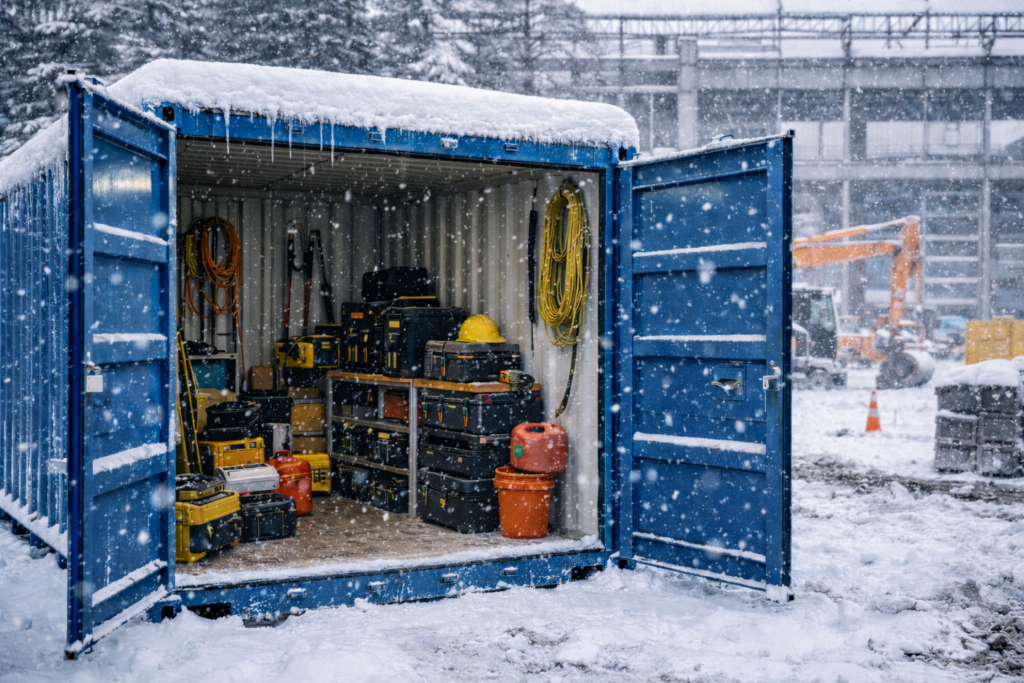
Weather has a way of rewriting even the best project plans. One day the site is wide open, the next it’s dealing with snow, ice, heavy rain, or frozen ground that slows everything down. In the Northeast — particularly across Massachusetts and Connecticut — these shifts are a regular part of jobsite life, not the exception. Recent events like Winter Storm Fern are reminders of how quickly conditions can change and how important weather-ready jobsite storage is to keeping projects moving when the forecast doesn’t cooperate.
While no one can control the forecast, jobsites that plan for changing conditions tend to recover faster, stay safer, and avoid unnecessary downtime. One of the most effective — and often overlooked — parts of that planning is how materials, workspace, and access are handled on site.
Why Weather-Ready Jobsite Storage Makes a Difference
Weather-related disruptions don’t just slow schedules. They affect productivity, safety, and how smoothly a crew can restart once conditions improve. Sites that plan ahead for weather uncertainty typically focus on a few key areas:
- Protecting tools, materials, and supplies from exposure
- Maintaining usable workspace regardless of outdoor conditions
- Ensuring safe access to storage during snow, ice, or muddy conditions
Addressing these factors early can turn what would be a full stop into a manageable delay.
The Role of Jobsite Storage in Unpredictable Weather
Weather-ready jobsite storage plays a major role in keeping projects moving when conditions aren’t ideal. Storage containers help protect materials from moisture, wind, and temperature swings while keeping critical items close at hand.
Beyond protection, good storage improves organization. When crews don’t need to transport tools on and off site each day due to weather risk, they save time and reduce wear on equipment. After storms or extended weather delays, organized storage also makes it easier to restart work quickly rather than losing hours to cleanup and regrouping.
Office Containers: Keeping Work Moving When Conditions Change
Weather doesn’t just affect field work — it impacts coordination, supervision, and communication. Office containers provide an enclosed, dependable space for planning, meetings, documentation, and breaks when outdoor conditions are challenging.
Having a functional on-site office allows project teams to stay productive during slowdowns caused by weather. Instead of losing the day entirely, crews can focus on planning, inspections, and coordination that help the project regain momentum once conditions improve.
Why Access Matters: Storage Accessories
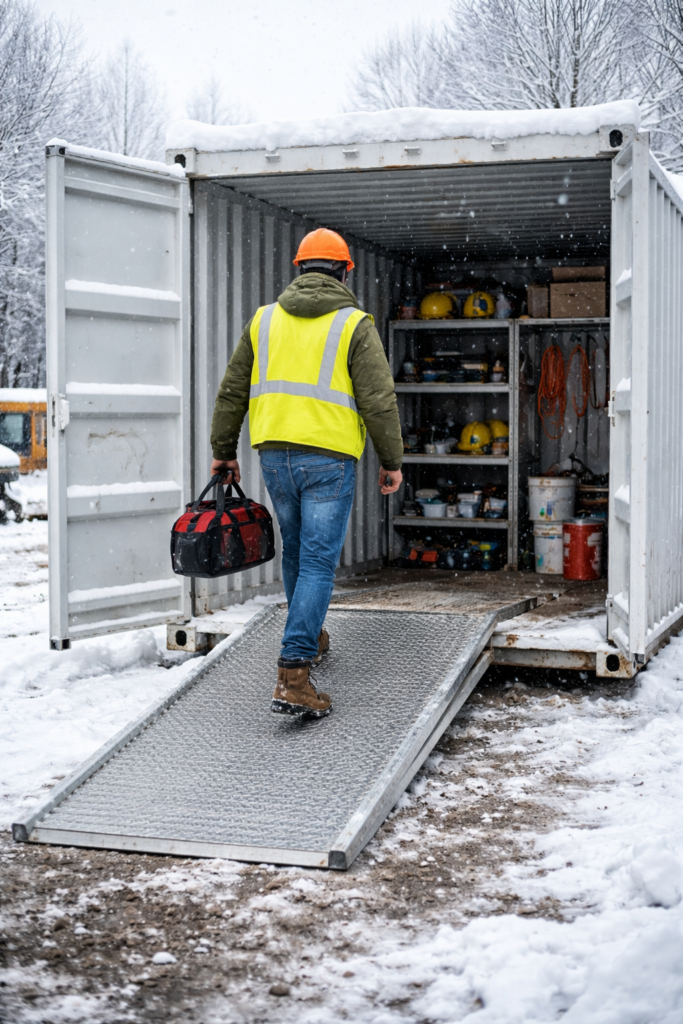
Access to storage can become a challenge during winter weather or periods of heavy rain. Snow buildup, ice, and uneven ground can make moving materials into and out of containers slower — and less safe.
Accessories like ramps help maintain safe, efficient access to storage containers when conditions change. They reduce lifting strain, improve material flow, and help crews move supplies without slipping or damaging equipment. While simple, these additions often make a noticeable difference during seasonal weather shifts.
Planning for Regional Conditions
In the Northeast, weather planning isn’t seasonal — it’s ongoing. Freeze-thaw cycles, snowstorms, and sudden temperature changes all affect how a site functions day to day. Understanding how local conditions impact access, storage, and workspace helps project teams make better decisions before weather becomes disruptive.
Regional providers like Eagle Leasing and our parents Rent-A-Container support this kind of planning by offering storage, container offices, and accessories designed for jobsite conditions, along with delivery support that accounts for local access and weather challenges.
Staying Ready, Whatever the Forecast
Weather will always be unpredictable. Jobsites that stay productive through changing conditions are usually the ones that plan ahead — not just for materials and schedules, but for storage, workspace, and access as well.
By thinking through how storage containers, container offices, and simple accessories fit into a broader weather-readiness plan, project teams can reduce downtime, improve safety, and stay flexible when the forecast doesn’t cooperate.