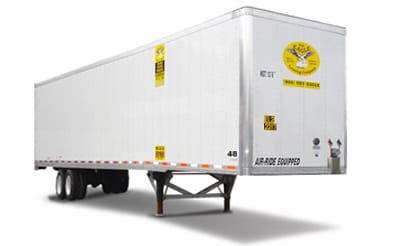

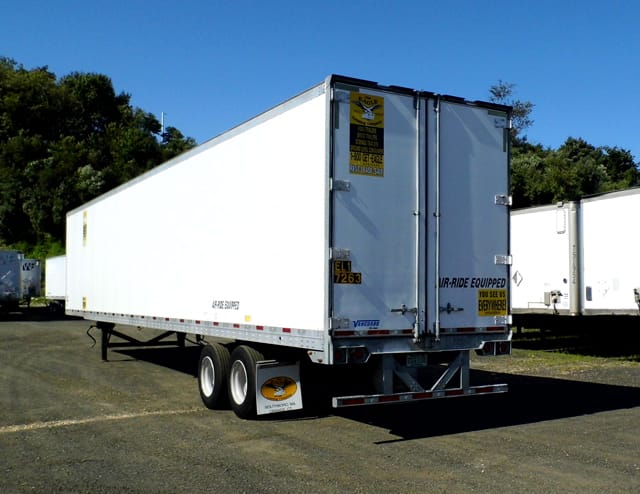


A 48ft storage trailer is a high-capacity, dock-ready solution for businesses that need long-term on-site storage with frequent access and operational flexibility.
These trailers are commonly used by manufacturers, distributors, and warehouses that require additional space without permanent construction or loss of mobility.
Unlike ground-level storage containers, a 48ft storage trailer is designed to integrate seamlessly with loading docks and can be repositioned on site when operational needs change.
Key Takeaways
- What is a 48ft storage trailer?
A large, elevated storage trailer designed for stationary, on-site storage with dock access and the ability to be moved when needed. - When is a storage trailer better than a container?
When you need loading dock access, longer storage lengths, greater interior height and width, or the ability to relocate the unit after loading. - Who typically uses 48ft storage trailers?
Manufacturers, distributors, warehouses, and commercial facilities managing high-volume or oversized inventory.
What is a 48ft Storage Trailer?
A 48ft storage trailer is a semi-trailer configured specifically for on-site storage rather than over-the-road freight hauling. It provides instant, secure storage capacity without the delays, cost, or permitting requirements of permanent building expansion.
Storage trailers sit approximately 52 inches off the ground, allowing them to back directly up to a standard loading dock. This makes them ideal for facilities that need frequent access to stored materials using forklifts or pallet jacks.
While storage trailers are capable of being moved, they are primarily intended to remain on site for extended periods, serving as an extension of your existing facility.
When a 48ft Storage Trailer Is the Right Choice
A 48ft storage trailer is best suited for operations that need maximum capacity and efficient access.
Ideal Use Cases
- Manufacturing facilities staging raw materials or finished goods
- Distribution centers managing overflow inventory
- Warehouses expanding capacity during peak seasons
- Facilities that may need to reposition storage units on site
- Operations requiring direct loading dock access
When a Storage Trailer May Not Be the Best Fit
- If you require ground-level, walk-in access only
- If you need interior shelving or racking systems
- If the unit will never need to be moved once loaded
Understanding these distinctions upfront helps ensure the right equipment is selected for your operation.
48ft Storage Trailer Dimensions and Capacity Explained
Exterior Dimensions
A typical 48ft storage trailer offers the following approximate exterior measurements:
- Length: 48 feet
- Width: Approximately 102 inches
- Height: Approximately 96 inches
- Deck height: Approximately 52 inches off the ground
These dimensions allow the trailer to align with standard commercial loading docks.
Interior Capacity
Storage trailers provide greater interior height and width than standard storage containers. This makes them well-suited for palletized inventory, bulk materials, and taller or oversized items that may not fit efficiently inside containers.
A 48ft storage trailer can typically accommodate up to 24 pallets, depending on pallet size, layout, and aisle requirements.
Door Options and Loading Dock Compatibility
Storage trailers are available with different door configurations to match your facility’s workflow.
Door Types
- Swing doors
- Roll-up doors
For loading dock applications, a roll-up door is strongly recommended. Roll-up doors allow faster access and easier forklift operation when moving materials in and out of the trailer throughout the day.
If your trailer will be used primarily at a dock, door type should be specified at the time of ordering.
Storage Trailer vs Storage Container: Key Differences
Many customers initially request a storage trailer when a container may actually be the better fit. Understanding the differences helps avoid costly mismatches.
| Feature | Storage Trailer | Storage Container |
| Ground-level access | No | Yes |
| Loading dock access | Yes | No |
| On-site mobility | Can be moved | Cannot be moved once loaded |
| Length options | Up to 53 ft | Up to 40 ft |
| Interior height and width | Larger | Smaller |
| Interior shelving options | Not available | Available |
If you need dock access, longer storage lengths, or the ability to move the unit after loading, a storage trailer is the better option. If ground-level access and interior shelving are priorities, a storage container may be more appropriate.
Delivery, Placement, and On-Site Movement
48ft storage trailers are delivered by Eagle Leasing’s professional drivers and positioned according to your site requirements. No permanent installation is required, allowing for rapid deployment and flexibility.
Once on site, trailers can be repositioned as needed using appropriate equipment. This makes storage trailers particularly valuable for evolving job sites or facilities undergoing layout changes.
Trailer Stairs and Accessory Options
For sites without loading docks, optional trailer stairs are available to improve accessibility and safety. Trailer stairs provide stable entry and exit for personnel accessing stored materials.
Additional accessories and configurations may be available depending on your specific application and location.
48ft Storage Trailer FAQs
What is the difference between a storage trailer and a storage container?
A storage trailer sits above ground, aligns with loading docks, and can be moved after loading. A storage container sits at ground level and cannot be moved once loaded.
Can a storage trailer be moved after it’s loaded?
Yes. Storage trailers are designed to be repositioned on site if operational needs change.
Do I need a loading dock to use a storage trailer?
A loading dock is recommended but not required. Trailer stairs can be used when dock access is not available.
How high off the ground is a storage trailer?
Storage trailers typically sit approximately 52 inches off the ground.
What door type should I choose for dock use?
A roll-up door is recommended for frequent dock access and efficient forklift operation.